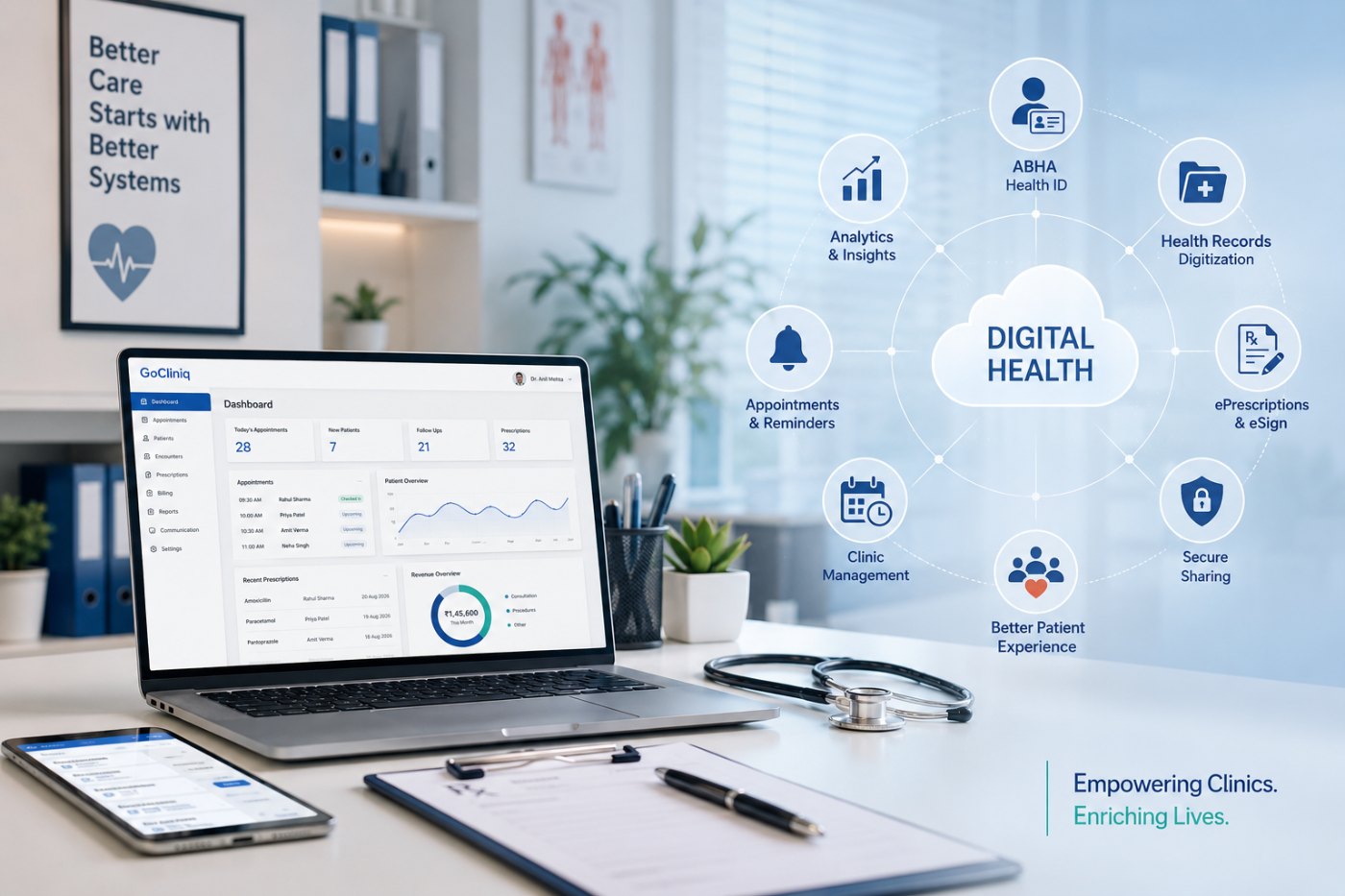
Will Clinic Digitization Become Mandatory in India?
A Practical Guide to ABDM, eSushrut@Clinic and the Future of Private Practice
Published: August 2026
If you're a doctor running a private clinic in India, you've probably heard terms like ABDM, ABHA, Digital Health Mission, or more recently eSushrut@Clinic.
For many practitioners, these sound like government initiatives that are relevant to large hospitals—not busy neighbourhood clinics.
But that assumption may no longer be true.
The Government of India has spent the last few years building the digital infrastructure for healthcare. The recent launch of eSushrut@Clinic, an affordable clinic management system designed specifically for small clinics, signals that the focus is now shifting from building digital infrastructure to helping clinics adopt it.
A question I hear increasingly often is:
"Will clinic digitization eventually become mandatory?"
The short answer is:
No—not today.
As of August 2026, the Government of India has not announced any requirement that private clinics must use electronic medical records or clinic management software.
However, when we look at the broader direction of policy, it becomes clear that digital healthcare is no longer a niche trend. It is becoming the foundation on which future healthcare services will operate.
This article explains what is happening, why it matters, and how private clinics can prepare.
India's Digital Health Journey So Far
Rather than launching one massive programme, India has built its digital health ecosystem step by step.
Some important milestones include:
- Ayushman Bharat Digital Mission (ABDM)
- ABHA (Ayushman Bharat Health Account)
- Healthcare Professional Registry
- Health Facility Registry
- Consent-based health record sharing
- Standardised digital health protocols
- eSushrut@Clinic for small private practices
Viewed individually, each initiative solves a specific problem.
Viewed together, they reveal a much bigger strategy: creating a nationwide digital health ecosystem where patients, doctors, hospitals, laboratories, pharmacies and insurers can interact more efficiently.
What is eSushrut@Clinic?
eSushrut@Clinic is a cloud-based clinic management system introduced under the Government of India's digital health initiatives.
It is aimed primarily at:
- Solo practitioners
- Small clinics
- Clinics currently using paper records
- Practices looking for affordable digitisation
Publicly announced features include patient registration, appointments, billing, prescriptions, cloud hosting and integration with India's digital health ecosystem.
Perhaps the most significant aspect is not the software itself—it is the message.
For the first time, the government has created a low-cost digital platform specifically targeting millions of small private clinics.
Is Clinic Management Software Mandatory in India?
This is probably the most searched question.
The answer today is simple:
No.
There is currently no nationwide requirement for private clinics to use clinic management software.
However, healthcare policy often evolves gradually.
Across many sectors, governments typically follow a familiar pattern:
- Build the infrastructure.
- Encourage voluntary adoption.
- Introduce incentives.
- Standardise processes.
- Increase digital participation over time.
Healthcare appears to be following a similar path.
That does not necessarily mean every clinic will face a legal mandate in the near future. It does suggest that digital workflows are likely to become increasingly important for participating in the broader healthcare ecosystem.
Why More Doctors Are Choosing to Digitize
For many clinics, the biggest benefits have little to do with government policy.
Digitisation helps reduce everyday administrative work.
Common improvements include:
- Faster appointment scheduling
- Easier patient record retrieval
- Better billing accuracy
- Reduced paperwork
- Follow-up reminders through WhatsApp or SMS
- Improved patient communication
- Better visibility into clinic performance
Patients also increasingly expect digital convenience—from appointment booking to receiving prescriptions and reminders.
Choosing Clinic Software Is About More Than Compliance
As more clinic management systems become available, doctors will have more choices than ever before.
Price is important.
But it should not be the only consideration.
When evaluating software, clinics should also consider:
- Ease of use
- Mobile experience
- Reliability
- Data security
- Patient communication
- AI capabilities
- Reporting and analytics
- Integration with national digital health standards
- Customer support
- Ability to grow with the practice
A clinic typically uses the same software for many years, making this a strategic decision rather than simply a technology purchase.
How Should Small Clinics Prepare?
Whether digitisation becomes mandatory or not, there are several practical steps every clinic can take today.
1. Move away from paper wherever practical
Even simple digital appointment scheduling can save significant administrative effort.
2. Organise patient records
Structured digital records are easier to search, analyse and share (with patient consent where applicable).
3. Train staff gradually
Successful digitisation is as much about people as technology.
4. Choose software that can evolve
Healthcare regulations, interoperability standards and patient expectations will continue to change.
Selecting software that is actively maintained reduces future disruption.
My Perspective
Having spent more than two decades working with enterprise software and digital transformation across Asia, I've learned that successful technology adoption rarely happens overnight.
It follows a predictable pattern.
Infrastructure comes first.
Adoption follows.
Eventually, digital becomes the normal way of working.
India's healthcare system appears to be moving along that same path.
Whether digital records become mandatory next year, five years from now, or remain voluntary for certain clinics is less important than recognising the broader direction.
The question is gradually shifting from:
"Should I digitize my clinic?"
to
"Which digital platform will best support my practice over the next decade?"
Government-backed platforms will play an important role in expanding access to digital healthcare. Private platforms, meanwhile, will continue to differentiate through user experience, automation, AI, patient engagement and workflow innovation.
Ultimately, the best software is the one that helps doctors spend less time on administration and more time caring for patients.
Frequently Asked Questions
Is clinic software compulsory in India?
No. As of August 2026, there is no nationwide requirement for private clinics to use clinic management software.
What is ABDM?
The Ayushman Bharat Digital Mission (ABDM) is India's national digital health initiative that aims to create interoperable digital health infrastructure connecting patients, providers and healthcare organisations.
What is ABHA?
ABHA (Ayushman Bharat Health Account) is a unique health identifier that enables patients to access and share their digital health information securely, subject to their consent.
What is eSushrut@Clinic?
eSushrut@Clinic is a government-supported cloud-based clinic management system intended to help small clinics adopt digital workflows at an affordable cost.
Should small clinics digitize now?
Every clinic's circumstances are different, but starting early allows teams to adapt gradually, streamline workflows and be better prepared as India's digital health ecosystem continues to mature.
Disclosure: This article reflects publicly available information and the author's analysis of India's digital health strategy. It should not be interpreted as legal or regulatory advice. Clinics should always refer to official government notifications for the latest requirements.
Book a Doctor Online
Find clinics near you and book appointments instantly - no waiting, no calls.
Find a Doctor →