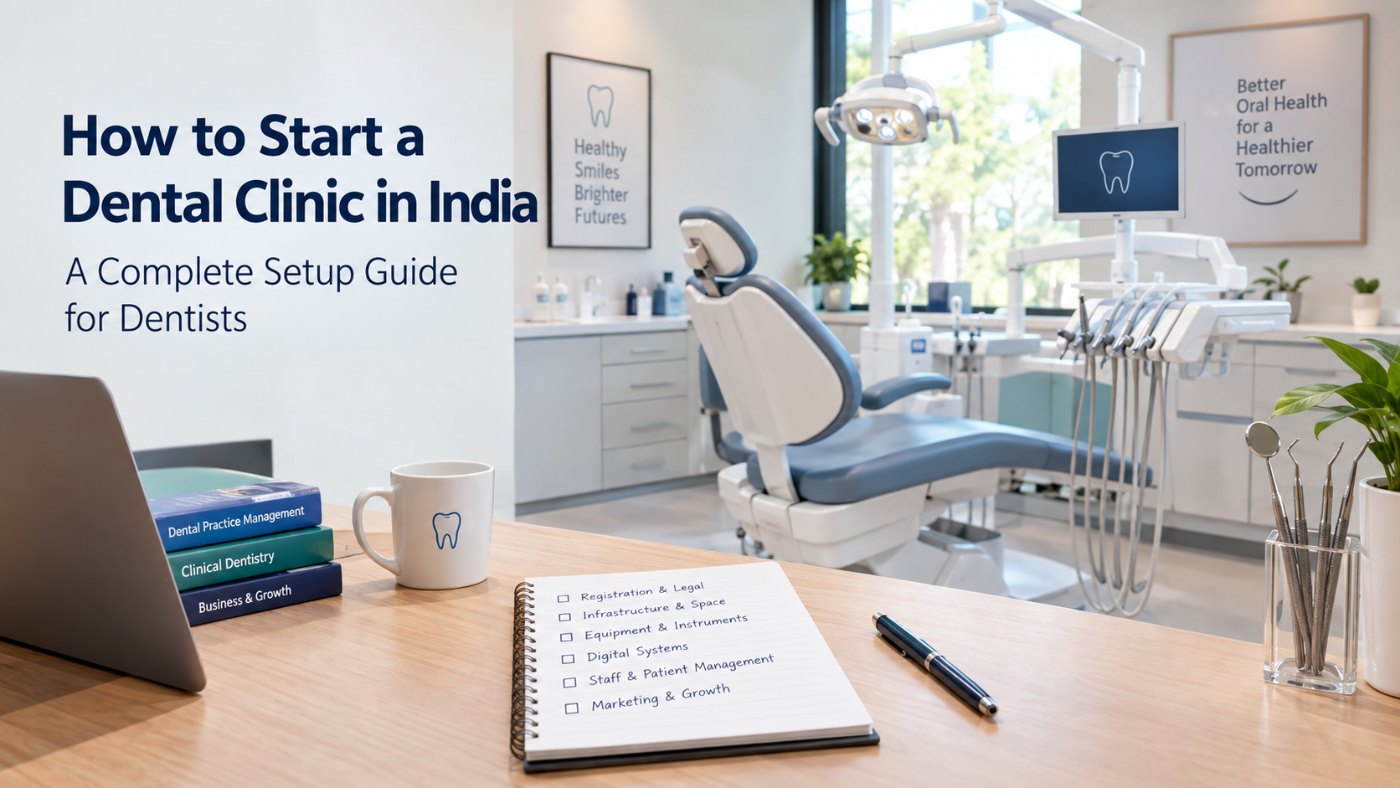
How to Start a Dental Clinic in India: A Complete Setup Guide for Dentists
From Operatory to Ownership
India's healthcare landscape is experiencing a massive shift, and the dental sector is right at the forefront. Growing awareness of oral hygiene, a booming middle class, and increasing demand for aesthetic dentistry are creating new opportunities for dental practices.
Yet many highly skilled dentists hit a roadblock when it comes to the business side of opening a practice.
For a passionate dentist, transitioning from working at someone else's operatory to putting up your own nameplate is an important career milestone.
However, setting up a new dental clinic in India is no longer just about buying a premium dental chair and waiting for patients to walk in. It involves a combination of clinical expertise, legal and regulatory requirements, infrastructure planning, patient management and smart business decisions.
Whether you are a fresh graduate stepping into practice or an experienced specialist looking to build your own clinic, this guide covers the key areas to think through before opening a dental clinic in India.
What Do You Need to Start a Dental Clinic in India?
Starting a dental clinic involves much more than choosing a location and purchasing equipment. You need to plan for registrations and compliances, clinic infrastructure, equipment, staffing, patient documentation, digital systems, marketing and working capital.
For a single-chair clinic, the initial investment can vary significantly depending on the city, equipment and interiors. A basic setup may cost around ₹6–9 lakh, while a more premium setup can go up to ₹12–18 lakh.
The following phases provide a practical framework for planning your clinic.
1. Dental Clinic Registration and Legal Requirements in India
Before purchasing equipment, you need to make sure you have the necessary registrations and approvals to practice and operate a healthcare establishment.
Ayushman Bharat Digital Mission (ABDM)
The Ayushman Bharat Digital Mission (ABDM) is a Government of India initiative aimed at developing a connected digital health infrastructure. Implemented by the National Health Authority (NHA), it is intended to connect patients, doctors, hospitals, pharmacies and diagnostic laboratories through a digital health ecosystem.
The relevant registrations and requirements can include:
- Health Facility Registry (HFR)
- Dental Council registration
- Approved map of the establishment from the respective development authority
- Address proof of the establishment
- Self-attested documents for the relevant qualifications of the doctor and paramedical staff
- NOC from the Pollution Control Board, where applicable
- NOC from the Fire Department, where applicable
- Healthcare Facility Registry (HFR) registration
- Healthcare Professional Registry (HPR) registration
Dental Council Registration
Ensure your BDS/MDS qualification is registered with the relevant State Dental Council, such as the UP Dental Council or Chhattisgarh State Dental Council.
The registration certificate should be displayed prominently in the clinic.
If you are planning to practice in another state, there may be additional requirements, including an NOC and registration with the relevant state authority. Check the requirements applicable to your specific state before opening the clinic.
Important: Registration and local approval requirements can vary by state, city and type of establishment. Verify the requirements applicable to your location before proceeding.
2. Dental Clinic Location, Space and Staffing
Your location has a direct impact on how easily new patients can find your clinic. Plan the clinic layout around both patient comfort and clinical efficiency.
Location Strategy
Ideally, look for a commercial or easily accessible location within a high-visibility residential or commercial area.
Space Allocation
A single-chair setup may require approximately 300–500 sq. ft., depending on the layout and services offered.
Consider allocating space for:
- Reception & Waiting Lounge: Professional, comfortable and well-lit.
- Main Operatory: Enough space around the dental chair for the dentist and assistant to move freely.
- Sterilization Zone: A dedicated and segregated area for scrubbing, autoclaving and pouching instruments.
- Consultation Desk: A private space to discuss treatment plans and finances with patients.
- Restroom: Properly ventilated and accessible to patients.
People
You should plan for at least one staff member to support the front desk and assist during procedures.
A soft-spoken person with basic education and good communication skills can add significant value to patient management. In a new practice, the front-desk person often becomes the first point of contact between the patient and the clinic.
One of the most important principles for clinic staff is to provide a seamless, transparent and empathetic patient experience at every touchpoint — from the first phone inquiry to post-treatment follow-up.
Basic SOP for Clinic Staff
A simple patient-management SOP can include:
- Immediate greeting
- Active listening
- Professional communication, whether face-to-face, on phone calls or through WhatsApp and clinic management software
- Transparent scheduling
- Appointment confirmations
- Clear communication about treatment costs
- Digital paperwork where appropriate
- Managing patient flow and wait times
- Proactively updating patients about dentist availability
- Providing a comfortable environment
- Clear post-operative instructions
- A courtesy follow-up call after procedures
- Inviting satisfied patients to leave online feedback
3. Dental Clinic Equipment and Instruments Checklist
Divide your inventory into two broad categories: capital equipment, which is a long-term investment, and consumables, which are recurring costs.
Core Equipment
Your basic dental clinic equipment may include:
- Dental Chair: Semi-automatic or fully automatic electrically operated chair with an attached delivery unit, LED light and spittoon.
- Air Compressor: Medical-grade oil-free compressor, minimum 1 HP.
- Sterilization: Front-loading Class B autoclave, glass bead sterilizer, ultrasonic cleaner bath and UV chamber.
- Diagnostics: Portable or wall-mounted X-ray machine paired with a digital RVG sensor.
- Handpieces & Motors: Airotors, micromotors, contra-angle handpieces and an ultrasonic scaler.
- Light Cure Unit: For composite restorations.
Essential Hand Instruments
Diagnostic & Examination
- Mouth mirrors
- Dental explorers/probes
- College tweezers
Operative / Restorative
- Spoon excavators
- Amalgam/composite plastic carriers
- Pluggers
- Carvers
- Burnishers
Endodontic
- Apex locator
- Rotary endomotor
- K-files
- H-files
- Rubber dam kits
Oral Surgery
- Extraction forceps, including adult and pediatric sets
- Root elevators
- Scalpel handles
- Periosteal elevators
- Bone files
- Needle holders
- Surgical scissors
Initial Material Stock
Plan your initial stock of:
- Composites
- GIC
- Impression materials
- Local anaesthesia
- Endodontic files
- Extraction forceps
- Diagnostic sets
- Disposable items such as gloves, masks and patient drapes
4. Dental Clinic Management Software and Digital Systems
Operating a modern clinic entirely manually becomes difficult as patient volume grows. It is worth putting basic digital systems in place from day one.
Clinic Management Software
A clinic management system can help manage appointments, patient records, billing, digital documents, WhatsApp appointment reminders and follow-ups.
A system such as GoCliniq can bring these workflows together so that the clinic does not have to manage appointments, billing and patient follow-ups separately.
The objective is not to digitize everything for the sake of it. The objective is to reduce repetitive work and make it easier for the doctor and staff to manage the patient journey.
Digital Payments
Set up a business bank account and provide convenient payment options such as:
- UPI QR code
- POS machine for credit/debit cards
- Net banking
5. Dental Patient Consent and Clinical Documentation
Informed consent is an important legal and ethical part of running a dental practice. It ensures that a patient understands and agrees to a procedure before it begins.
Consent is not just a signed piece of paper. It is a shared decision-making process.
For consent to be meaningful, the practitioner should explain the key aspects of the proposed treatment, including:
- The Diagnosis: The nature and status of the condition being treated.
- The Proposed Treatment: What the procedure involves, its purpose and what the patient can expect.
- Risks and Benefits: The relevant risks, potential side effects and expected benefits.
- Alternatives: Other available treatment options, including the option and risks of not proceeding with treatment.
Best Practices for Clinical Documentation
Document everything: Even where oral or implied consent may be appropriate, document that the risks, benefits and alternatives were discussed and that the patient agreed.
Provide take-home information: For complex procedures, consider providing printed material or digital links covering the procedure and post-operative care.
Allow time for questions: Do not rush the consent process. Give the patient an opportunity to ask questions before signing any forms.
6. How to Increase Revenue from a Dental Clinic
As the practice grows, adding complementary dental specialties under one roof can help increase revenue per chair and improve patient retention.
Instead of referring treatments such as dental implants or braces outside the clinic, having access to additional specialists allows the practice to retain more of the patient's treatment journey within the clinic.
The objective should not simply be to add more services. The focus should be on building a practice where patients can access the right treatment at the right time.
7. Dental Clinic Marketing and Local SEO
An empty clinic costs money. Start thinking about local marketing before the official opening rather than waiting for the clinic to open.
Local SEO and Google Business Profile
A Google Business Profile is an important starting point for a new dental clinic.
Make sure your clinic profile has:
- Accurate clinic name and address
- Correct opening hours
- High-quality interior and exterior photographs
- Phone number
- Online booking option
- Relevant clinic information
Patient Reviews
For a local dental practice, genuine patient reviews can be an important trust signal.
An active and positive review profile can help patients feel more comfortable about contacting a clinic they have never visited before. It can also contribute to local search visibility.
The focus should always be on delivering a good patient experience first and making it easy for genuinely satisfied patients to share their feedback.
Physical Branding
Install a clean, visible signboard outside the clinic that complies with applicable local regulations.
Hyper-Local Marketing
Consider:
- Flyers in nearby residential societies
- Local community outreach
- A dental check-up camp during the opening period
- Partnerships with nearby businesses or communities
For a new clinic, the first few months are about making people in the immediate neighbourhood aware that you exist.
8. Dental Lab, Imaging Centre and Supplier Partnerships
This is one of the most overlooked parts of setting up a new dental clinic.
Poor planning can lead to unnecessary inventory, higher costs and delays in treatment.
Dental Lab and Material Supplier
Try to align your dental laboratory and material suppliers before opening day.
One useful approach is to divide inventory into:
Critical: Anaesthetics, files, composites, gloves, sterilization pouches and other regularly used materials.
Specialized: Implant components, bone grafts and other materials that may not be required for every case.
Establish Service Level Agreements
Before sending your first case to a dental lab, agree on expected turnaround times for different types of lab work.
This can prevent unnecessary delays and make it easier for your staff to communicate realistic timelines to patients.
Imaging Centre and Diagnostic Laboratory
Instead of simply giving patients a prescription or referral slip and asking them to find a scan centre themselves, consider establishing a relationship with a reliable imaging centre for CBCT and OPG requirements.
Similarly, for pathology requirements, a local diagnostic provider that offers home or clinic sample collection can make the process more convenient for patients.
9. Dental Clinic Setup Cost in India
The cost of setting up a dental clinic varies significantly depending on the city, premises, equipment, interiors and the level of investment.
For a typical Tier-1 or Tier-2 Indian city, the following can be used as an initial reference:
SetupEstimated investmentBasic single-chair setup₹6,00,000–₹9,00,000Premium single-chair setup₹12,00,000–₹18,00,000
Basic Single-Chair Setup
Approximately ₹6–9 lakh, including a basic chair, standard autoclave, RVG, basic interiors and rental-related expenses.
Premium Single-Chair Setup
Approximately ₹12–18 lakh, including a mid- to top-tier dental chair, Class B autoclave, advanced digital RVG, premium interiors and a higher rental deposit.
Keep Working Capital Aside
Do not spend the entire budget on equipment and interiors.
As a rule of thumb, keep a buffer of around ₹2 lakh as working capital to cover expenses such as rent, salaries and electricity while patient footfall stabilizes.
10. Dentist Upskilling: The Route to Better Practice and Revenue
A good upskilling strategy can help dentists handle more advanced cases confidently rather than losing those cases to external referrals.
1. Indian Dental Association (IDA)
The IDA is an important source of continuing education for dentists. Engaging with local and national IDA branches can provide access to structured learning and professional development.
2. Vendor-Sponsored Training
You do not necessarily need a large training budget to keep your clinical skills updated.
Dental suppliers and manufacturers often conduct product demonstrations, material masterclasses and certification programs covering areas such as restorative materials, implants and clear aligners.
3. Digital Webinars and Micro-Learning
Webinars are useful for staying updated on dental materials, pharmacology and digital workflows without losing valuable chair time.
Manufacturers such as 3M Oral Care, Ivoclar and GC India regularly conduct educational sessions. Signing up for relevant manufacturer newsletters can be an easy way to stay informed.
4. Specialized Certifications and Hands-On Workshops
Webinars can teach theory, but hands-on workshops help develop the practical skills and confidence required for more advanced procedures.
Look for relevant certification courses and hands-on workshops offered by dental institutions, professional associations, hospitals and experienced dental practitioners.
Dental Clinic Setup Checklist
Before opening your clinic, make sure you have thought through:
- Dental Council registration and applicable local requirements
- Clinic premises and layout
- Dental chair and core equipment
- Sterilization setup
- X-ray/RVG requirements
- Staff and front-desk processes
- Patient consent and clinical documentation
- Billing and digital payments
- Clinic management software
- Google Business Profile
- Dental laboratory and imaging partnerships
- Initial marketing
- Working capital
The clinic may start with a dental chair, but building a sustainable practice requires much more than equipment.
Frequently Asked Questions
How much does it cost to start a dental clinic in India?
A basic single-chair dental clinic may require approximately ₹6–9 lakh, while a premium setup may cost around ₹12–18 lakh. The actual investment will depend on the city, premises, equipment, interiors and other requirements.
What equipment is required to start a dental clinic?
Core equipment can include a dental chair and delivery unit, compressor, sterilization equipment, X-ray/RVG setup, handpieces, motors, curing light and essential dental instruments.
How much space is required for a dental clinic?
A single-chair setup may require approximately 300–500 sq. ft., depending on the layout, services and applicable local requirements.
Should a new dental clinic use clinic management software?
A digital clinic management system can help manage appointments, patient records, billing, reminders and follow-ups from the beginning. The benefit is particularly noticeable as patient volume grows.
How can a new dental clinic get its first patients?
Local visibility is a good starting point. A properly configured Google Business Profile, genuine patient reviews, online booking, referrals, community outreach and hyper-local marketing can all help a new clinic build awareness.
From Opening a Clinic to Building a Practice
Opening a dental clinic is a major professional milestone. But the dental chair, interiors and equipment are only the starting point.
The practices that eventually become sustainable businesses tend to pay attention to the less visible parts of the operation as well — patient experience, staff processes, documentation, follow-ups, financial discipline, local visibility and continuous clinical learning.
The goal is not simply to open a clinic.
It is to build a practice that patients trust, staff can manage efficiently and the dentist can grow over time.
Book a Doctor Online
Find clinics near you and book appointments instantly - no waiting, no calls.
Find a Doctor →