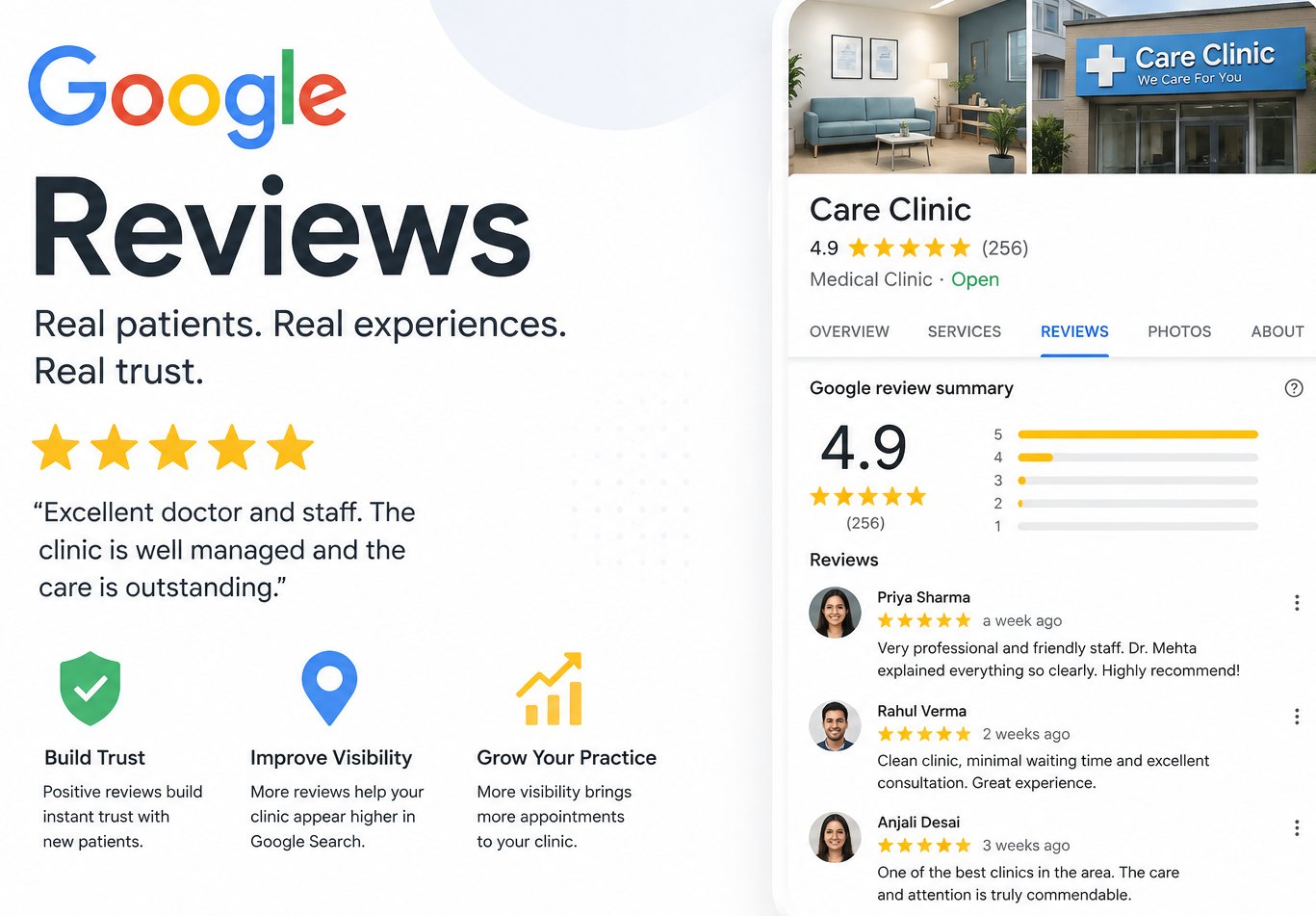
How to Get More Google Reviews for Your Clinic (Without Feeling Pushy)
Simple, ethical ways to earn more patient reviews and build lasting trust online.
When a patient searches for a doctor online, one of the first things they notice isn't your degrees or years of experience—it's your Google rating and the number of reviews.
Two clinics may offer equally good care, but the one with 250 genuine reviews often earns more trust than the one with only 12.
The good news? Getting more Google reviews doesn't require marketing tricks. It requires a simple, repeatable process.
Why Google Reviews Matter
Google reviews influence:
- Whether a patient chooses your clinic.
- How prominently your clinic appears in Google Search and Google Maps.
- The level of trust a new patient has before their first visit.
For many independent clinics, online reputation has become as important as word-of-mouth referrals.
Why Most Clinics Receive Very Few Reviews
Most patients are happy to leave a review—but only if asked at the right time.
Common reasons clinics miss opportunities include:
- Staff forget to ask after a busy consultation.
- Patients intend to leave a review later but never do.
- Review requests are sent to every patient, including those who may not have had a great experience.
- There is no consistent process.
As a result, even excellent doctors accumulate reviews very slowly.
The Best Time to Ask
The ideal moment is shortly after a positive consultation, when the patient has had a good experience and it is still fresh in their mind.
Don't wait weeks.
Don't ask before the consultation.
Ask after the visit, when the patient leaves feeling satisfied.
Only Ask the Right Patients
One mistake many clinics make is requesting reviews from every patient.
A better approach is to let the doctor decide.
Doctors usually know which patients had an excellent experience and are most likely to leave thoughtful, genuine feedback.
This keeps review requests authentic while avoiding unnecessary messages.
Make It Effortless
Patients are far more likely to leave a review if the process takes less than a minute.
A good review request should:
- Include a direct Google review link.
- Work on mobile phones.
- Require no searching or login to another system.
- Be short and polite.
The fewer clicks involved, the higher the completion rate.
Build a Habit, Not a Campaign
Many clinics ask for reviews enthusiastically for a week and then stop.
Instead, create a simple routine.
For example, every week, identify a small group of patients who had an excellent experience and send them a review request.
Small, consistent efforts over months produce far better results than occasional campaigns.
Respond to Every Review
Whether the review is positive or constructive:
- Thank the patient.
- Remain professional.
- Never discuss confidential medical information.
- Show appreciation for their feedback.
Responding demonstrates that your clinic values patient experience.
Avoid Fake Reviews
Buying reviews or asking friends who have never visited your clinic to leave ratings may seem like a shortcut, but it can damage credibility and violate Google's policies.
Authentic reviews from real patients are far more valuable and build long-term trust.
A Simple System Makes the Difference
The biggest challenge isn't convincing patients to leave reviews—it's remembering to ask consistently.
Using a clinic management system that helps identify satisfied patients and automates review requests can make the process effortless.
At GoCliniq, we believe review requests should remain under the doctor's control. Instead of sending messages to every patient, doctors can simply nominate patients they feel had a positive experience. GoCliniq then sends review requests automatically on a scheduled basis, helping clinics build their online reputation while keeping communication thoughtful and respectful.
Final Thoughts
Great patient care deserves to be visible.
Every genuine Google review helps future patients make informed decisions and strengthens the trust your clinic has earned.
The clinics that consistently grow their reviews aren't necessarily providing better care—they simply have a better process for asking.
Book a Doctor Online
Find clinics near you and book appointments instantly - no waiting, no calls.
Find a Doctor →