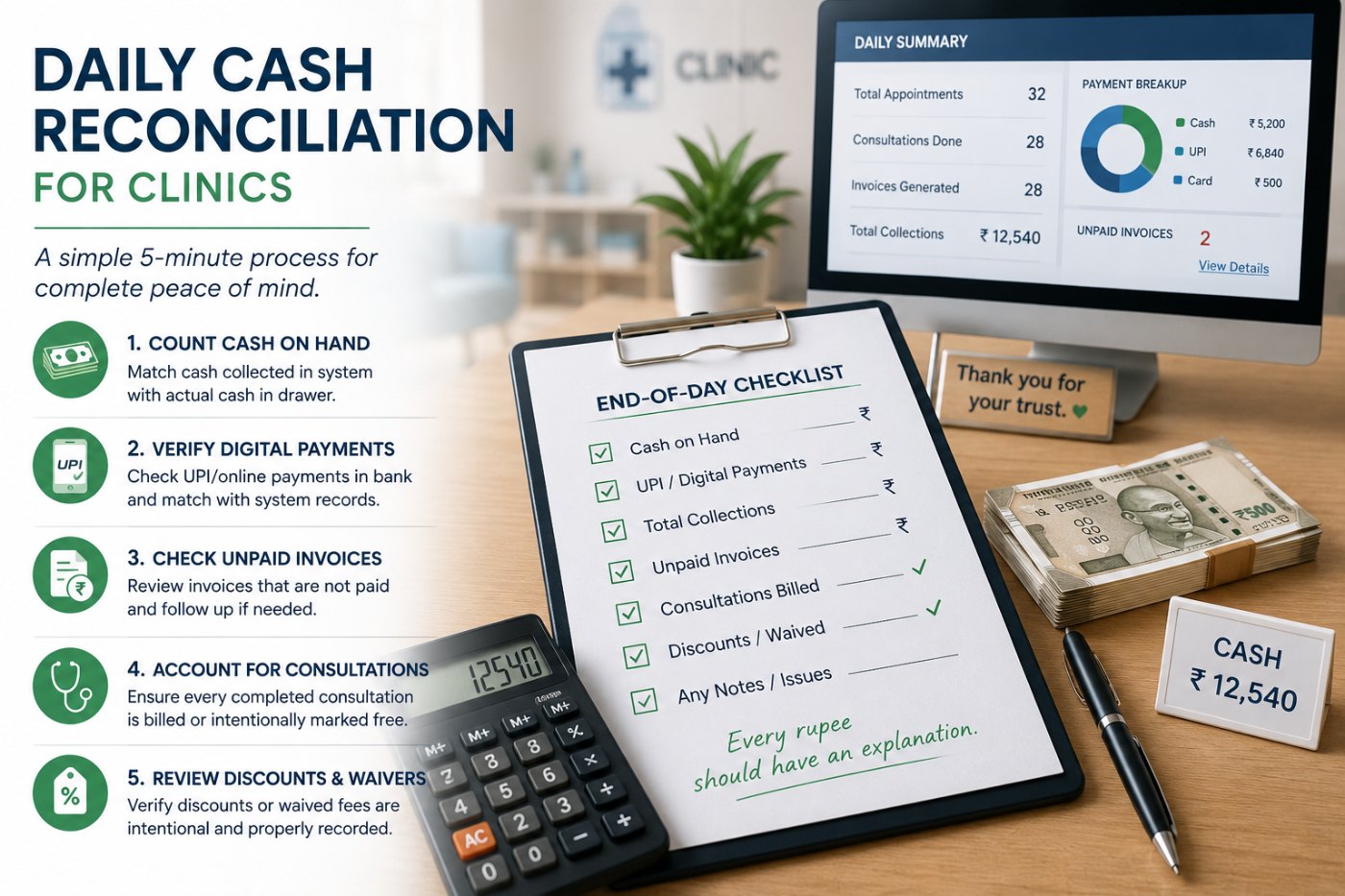
Daily Cash Reconciliation for Clinics: A Simple End-of-Day Checklist
Every rupee should have an explanation. A five-minute daily reconciliation can save hours of investigation later.
At the end of a busy clinic day, the last thing most doctors want to do is count cash. Yet many revenue leakages happen not because of fraud, but because of small operational mistakes.
A consultation isn't billed.
A payment is collected but not recorded.
A UPI payment arrives, but the invoice is left unpaid in the system.
These are common issues in busy clinics, especially when reception staff are handling appointments, billing and patient calls simultaneously.
Fortunately, daily cash reconciliation doesn't have to be complicated.
Why Daily Reconciliation Matters
A simple end-of-day check helps you:
- Ensure every consultation has been billed.
- Verify that cash collected matches cash on hand.
- Confirm UPI collections match your bank account.
- Identify missing or unpaid invoices before they become difficult to trace.
- Give doctors confidence that the clinic's revenue has been accounted for.
Small discrepancies are much easier to resolve on the same day than weeks later.
A Practical 5-Minute Reconciliation Process
Step 1: Count Cash on Hand
At the end of the day, count the physical cash available at the clinic.
Compare it with the total cash payments recorded in your clinic management system.
If the numbers don't match, investigate immediately while staff still remember the day's transactions.
Step 2: Verify Digital Payments
Review your UPI and other digital payment collections.
Compare them with the payments recorded in your software.
Every successful payment should have a corresponding invoice marked as paid.
Step 3: Check for Unpaid Invoices
Look for invoices that were generated but are still marked as unpaid.
Sometimes patients forget to pay.
Sometimes staff forget to update payment status after receiving payment.
These invoices should always be reviewed before closing the day.
Step 4: Ensure Every Consultation Was Accounted For
Review the day's appointments.
Ask a simple question:
Was every completed consultation either billed or intentionally marked as free?
This helps identify consultations that may have been missed during busy periods.
Step 5: Review Discounts and Waived Fees
Occasionally, doctors waive consultation charges or provide discounts for genuine reasons.
Review these transactions briefly to ensure they were intentional and properly recorded.
Keeping a clear audit trail prevents confusion later.
Common Reasons for Revenue Mismatches
Most discrepancies arise from everyday workflow issues:
- Consultation completed but no invoice created.
- Investigation or procedure performed but forgotten during billing.
- Invoice created but payment not collected.
- Payment collected but not marked in the system.
- Cash entered as UPI or vice versa.
- Duplicate invoice created by mistake.
Finding these issues on the same day makes them much easier to correct.
Build a System, Not Just a Habit
Manual reconciliation works when a clinic sees only a handful of patients.
As patient volumes grow, relying entirely on memory becomes unreliable.
A clinic management system can automatically highlight exceptions, such as:
- Completed appointments without invoices.
- Unpaid invoices.
- Payment type mismatches.
- Missing consultation fees.
- Unusually high discounts or waived charges.
Instead of searching through every transaction, staff only need to review the exceptions.
How GoCliniq Helps
GoCliniq includes daily reconciliation insights designed for independent clinics.
Rather than overwhelming staff with reports, the system highlights potential issues that need attention, such as invoices awaiting payment, appointments that may not have been billed, and differences between recorded payment methods and daily collections.
This allows clinic staff to complete end-of-day reconciliation in just a few minutes while giving doctors greater confidence in the accuracy of their daily collections.
Final Thoughts
Daily reconciliation isn't about accounting—it's about operational discipline.
Five minutes at the end of each day can prevent revenue leakage, improve financial accuracy, and give you complete visibility into how your clinic is performing.
The best clinic management systems don't just record transactions—they help you identify the ones that need your attention.
Book a Doctor Online
Find clinics near you and book appointments instantly - no waiting, no calls.
Find a Doctor →